
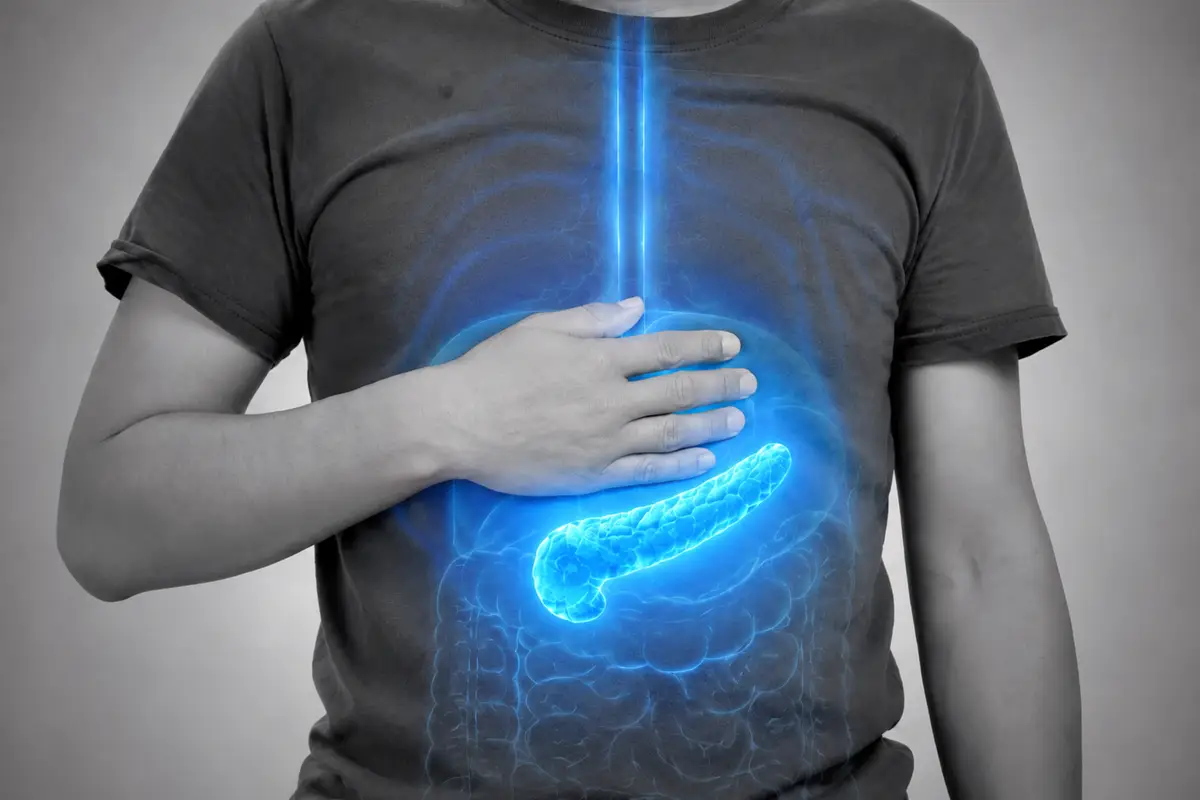
WHAT IS PANCREAS SURGERY?
The pancreas is an organ located behind the stomach that produces enzymes needed for digestion and hormones that help regulate blood sugar. Pancreas surgery may be recommended to treat pancreatic cancer, precancerous cysts, neuroendocrine tumors, and certain benign or inflammatory conditions.
The type of operation depends on the location and extent of the disease, whether nearby structures are involved, and the patient’s overall health. At Compassion Surgical, each patient receives an individualized evaluation to determine whether an open, laparoscopic, or robotic-assisted approach is appropriate.
TYPES OF PANCREAS SURGERY
Whipple Procedure (Pancreaticoduodenectomy)
The Whipple procedure is generally used to treat tumors or other conditions involving the head of the pancreas. It removes the head of the pancreas, the duodenum, the gallbladder, part of the bile duct, and nearby lymph nodes. Depending on the surgical approach, part of the stomach may also be removed. The remaining digestive organs are then reconnected to allow food, bile, and pancreatic enzymes to pass through the digestive tract.
Distal Pancreatectomy
A distal pancreatectomy removes the body and tail of the pancreas. Because the pancreas and spleen share important blood vessels, the spleen is often removed during this operation. In selected patients with benign or low-grade tumors, a spleen-preserving approach may be possible.
Total Pancreatectomy
A total pancreatectomy removes the entire pancreas and may also involve removal of the duodenum, gallbladder, part of the bile duct, spleen, and nearby lymph nodes. Because the entire pancreas is removed, patients will require lifelong insulin therapy and pancreatic enzyme replacement.
Other Pancreatic Procedures
Selected patients with small benign or low-grade tumors may be candidates for a more limited operation, such as enucleation or central pancreatectomy. These procedures preserve more pancreatic tissue but are appropriate only in specific circumstances.
COMMON REASONS FOR PANCREAS SURGERY
Pancreatic Cancer
Surgery may offer the best opportunity for long-term cancer control when pancreatic cancer can be completely removed. The location of the tumor determines whether a Whipple procedure, distal pancreatectomy, or total pancreatectomy is appropriate. Some patients may receive chemotherapy, with or without radiation therapy, before or after surgery.
Pancreatic Neuroendocrine Tumors
Pancreatic neuroendocrine tumors develop from the hormone-producing cells of the pancreas. Treatment depends on the tumor’s size, location, behavior, and whether it has spread.
Pancreatic Cysts and Precancerous Lesions
Certain pancreatic cysts, including some intraductal papillary mucinous neoplasms (IPMNs) and mucinous cystic neoplasms, may have the potential to become cancerous. Surgery may be recommended when imaging, biopsy findings, symptoms, or changes over time suggest a significant risk.
Other Tumors and Pancreatic Conditions
Surgery may also be considered for ampullary cancer, distal bile duct cancer, duodenal cancer, solid pseudopapillary tumors, selected benign growths, or complications of chronic pancreatitis.
HOW IS PANCREAS SURGERY PLANNED?
Pancreas surgery requires careful evaluation before an operation is recommended. The process may include specialized CT or MRI imaging, endoscopic ultrasound, biopsy, blood tests, and assessment of the patient’s nutrition and overall health.
For patients with cancer, treatment planning may involve collaboration among pancreatic surgeons, medical oncologists, gastroenterologists, radiologists, pathologists, and other specialists. Some patients benefit from chemotherapy before surgery, while others may proceed directly to an operation.
HOW IS PANCREAS SURGERY PERFORMED?
Pancreatic surgery is performed under general anesthesia in a hospital. Depending on the diagnosis, anatomy, and complexity of the operation, surgery may be performed through an open incision or with a minimally invasive laparoscopic or robotic-assisted approach.
During a Whipple procedure, the surgeon removes the affected organs and tissues and then reconstructs the digestive tract. The remaining pancreas, bile duct, and stomach or preserved portion of the digestive tract are connected to the small intestine.
During a distal pancreatectomy, the body and tail of the pancreas are removed, with or without the spleen. A total pancreatectomy removes the entire pancreas and requires lifelong treatment to replace the hormones and digestive enzymes normally produced by the organ.
WHAT CAN I EXPECT DURING RECOVERY?
Pancreatic surgery is a major operation, and recovery varies according to the procedure, surgical approach, and patient’s overall health. Surgery generally takes several hours, followed by a hospital stay of several days or longer.
After discharge, patients gradually increase their activity and advance their diet according to their surgical team’s instructions. Fatigue, reduced appetite, and weight loss may occur during the early recovery period. Many patients need approximately 6 – 8 weeks or longer before returning to their usual activities.
An initial postoperative appointment is generally scheduled within 1 – 2 weeks. The surgeon will evaluate healing, review the final pathology results, and coordinate any additional treatment or surveillance that may be needed.
WHAT ARE THE POSSIBLE RISKS OF PANCREAS SURGERY?
Pancreatic operations are complex and carry risks that may include:
- Bleeding
- Infection
- Pancreatic or bile leakage
- Delayed emptying of the stomach
- Changes in digestion or nutrition
- Weight loss
- Blood clots
- Diabetes or changes in blood sugar
- The need for pancreatic enzyme replacement
The specific risks depend on the operation and the patient’s health. Your surgeon will review these considerations and explain how complications are monitored and treated.
PANCREAS SURGERY FAQs
Will I need chemotherapy after pancreas surgery?
That depends on the diagnosis, stage, pathology results, and treatment received before surgery. Many patients undergoing surgery for pancreatic cancer receive chemotherapy before or after the operation. Recommendations are developed with the patient’s oncology team.
Will pancreas surgery affect digestion?
It can. Removing pancreatic tissue may reduce the production of digestive enzymes. Symptoms can include bloating, diarrhea, oily stools, difficulty maintaining weight, or discomfort after eating. Pancreatic enzyme replacement may help the body digest and absorb nutrients.
Can pancreas surgery cause diabetes?
Removing part of the pancreas can affect insulin production, although not every patient develops diabetes. Total pancreatectomy results in permanent diabetes and requires lifelong insulin therapy. Blood sugar is monitored before and after surgery.
What happens if my spleen is removed?
If a distal or total pancreatectomy includes removal of the spleen, specific vaccinations will be recommended to reduce the risk of certain infections. Your care team will explain the appropriate vaccination schedule and long-term precautions.
How often will I need follow-up care?
Follow-up begins shortly after surgery and is individualized according to the diagnosis, pathology findings, recovery, and any additional treatment needed. Patients treated for cancer will usually have ongoing surveillance coordinated with their surgical and medical oncology teams.
PERSONALIZED CARE FOR PANCREATIC DISEASE
If you have been diagnosed with pancreatic cancer, a pancreatic cyst, or another condition that may require surgery, schedule a consultation at Compassion Surgical. Dr. Albert Amini and Dr. Weston Stover provide fellowship-trained hepatopancreatobiliary surgical care and can review your imaging, diagnosis, and treatment options to determine the most appropriate approach.
In the video below, Dr. Amini discusses treatment options with a patient diagnosed with pancreatic cancer. Every diagnosis is different. A personal consultation is necessary to review your imaging, pathology, overall health, and possible next steps.