
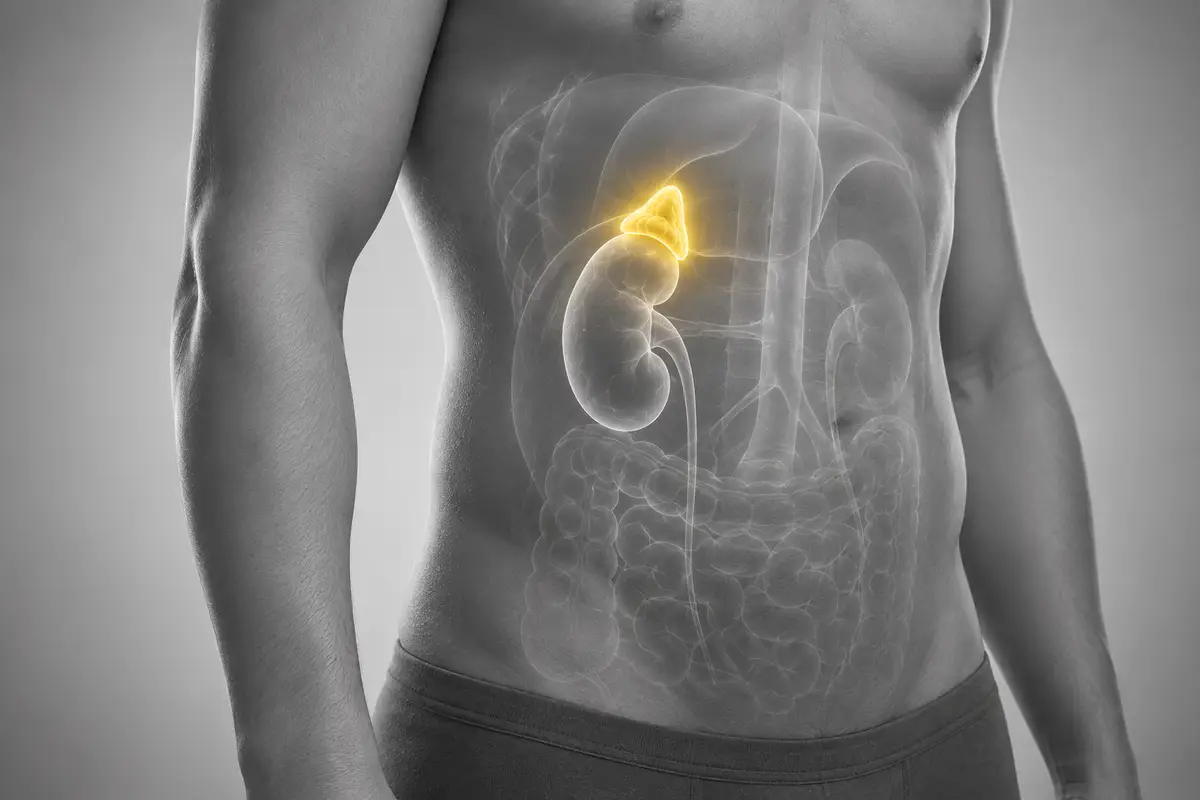
WHAT IS ADRENAL GLAND REMOVAL SURGERY?
The adrenal glands are two small glands located above the kidneys. They produce hormones that help regulate blood pressure, metabolism, the body’s response to stress, and the balance of salt and water.
An adrenalectomy is an operation to remove one adrenal gland. It may be recommended for a tumor that produces excess hormones, has concerning imaging characteristics, is increasing in size, or is suspected or confirmed to be cancerous. Conditions that may require adrenalectomy include pheochromocytoma, primary aldosteronism, cortisol-producing tumors that cause Cushing syndrome, adrenocortical cancer, and selected cancers that have spread to the adrenal gland.
At Compassion Surgical, the operative approach is individualized according to the tumor’s size, imaging characteristics, hormone production, and likelihood of malignancy. Many adrenal tumors can be removed using minimally invasive laparoscopic or robotic techniques.
WHO ARE IDEAL CANDIDATES FOR THIS PROCEDURE?
Hormone-Producing Adrenal Tumors
Some adrenal tumors produce excessive amounts of hormones. Depending on the hormone involved, patients may experience high blood pressure, low potassium, headaches, sweating, heart palpitations, weight changes, muscle weakness, abnormal blood sugar, or other symptoms.
Examples include:
- Pheochromocytoma, which produces excess catecholamines
- Aldosterone-producing tumors, which may cause high blood pressure and low potassium
- Cortisol-producing tumors, which may cause Cushing syndrome
Adrenal Tumors Concerning for Cancer
Surgery may be recommended when an adrenal mass has imaging features concerning for cancer, is growing, or is above a certain size. The operative approach depends on the tumor’s characteristics and whether it appears to involve surrounding structures.
Adrenal Cancer
Adrenalectomy is the primary treatment for adrenal cancer that can be completely removed. When cancer is suspected, the goal is to remove the tumor intact and avoid disrupting its capsule. Some patients require an open operation to achieve a safe and complete cancer removal.
Other Adrenal Masses
Some adrenal masses are discovered incidentally during imaging performed for another reason. Not every adrenal mass requires surgery. Blood and urine testing, imaging findings, tumor size, growth, symptoms, and the patient’s overall health are considered before recommending observation or removal.
WHAT HAPPENS DURING AN ADRENALECTOMY?
Adrenalectomy is performed under general anesthesia. During a minimally invasive adrenalectomy, the surgeon uses several small incisions and a camera to locate and remove the affected adrenal gland. Depending on the tumor’s size, location, and characteristics, surgery may be performed laparoscopically, robotically, or through an open incision.
Minimally invasive surgery offers smaller incisions, less postoperative discomfort, and a shorter hospital stay than open surgery.
Most patients undergo evaluation by an endocrinologist before surgery. Patients with hormone-producing tumors may require specific medications before and after the operation to control blood pressure, heart rate, potassium, cortisol, or other hormone-related effects.
WHAT SHOULD I EXPECT DURING RECOVERY?
The length of surgery and hospital stay depends on the type of tumor and operative approach. Patients undergoing minimally invasive adrenalectomy may go home the same day or after an overnight stay, while others require a longer hospitalization.
Patients commonly experience temporary soreness, fatigue, and abdominal discomfort after surgery. Light activity is encouraged as directed, but lifting and strenuous activity may be restricted during the initial recovery period. Many patients gradually return to routine activities over several weeks, although recovery after an open adrenalectomy may take longer.
Hormone levels and medications may need to be monitored and adjusted after surgery. Some patients temporarily require steroid replacement while the remaining adrenal gland recovers. If both adrenal glands are removed, lifelong adrenal hormone replacement is necessary.
A postoperative appointment will be scheduled to review healing, pathology results, hormone management, and any additional treatment or surveillance that may be needed.
ADRENALECTOMY FAQs
Is adrenal gland removal surgery painful?
Adrenalectomy is performed under general anesthesia, so patients are asleep during the operation. Some pain or discomfort is expected afterward. Minimally invasive surgery causes less postoperative discomfort than open surgery, but each patient’s experience is different.
Your surgical team will provide an individualized pain-control plan. Take only medications approved or prescribed by your surgeon, since medications such as aspirin and certain anti-inflammatory drugs may not be appropriate around the time of surgery.
What are the symptoms of an adrenal tumor?
Many adrenal tumors cause no symptoms and are discovered incidentally on imaging. Hormone-producing tumors can cause symptoms such as:
- High blood pressure
- Headaches, sweating, or heart palpitations
- Low potassium or muscle weakness
- Unexplained weight gain or weight loss
- Changes in blood sugar
- Easy bruising or changes in body-fat distribution
- Fatigue, anxiety, or sleep disturbance
These symptoms can be caused by many conditions and do not necessarily indicate an adrenal tumor. Proper evaluation generally includes imaging and laboratory testing.
What are the possible risks of adrenalectomy?
Potential risks include bleeding, infection, blood clots, injury to nearby organs or blood vessels, reactions to anesthesia, incisional hernia, and the need to convert from a minimally invasive operation to an open operation. Patients may also experience temporary or permanent changes in hormone levels or blood pressure.
The specific risks depend on the tumor, operative approach, and patient’s overall health and will be reviewed before surgery.
How long is recovery after adrenalectomy?
Recovery varies according to the operative approach and complexity of the surgery. Patients undergoing minimally invasive adrenalectomy often resume light activities within one to two weeks and gradually return to normal activities over the following weeks. Recovery after an open operation may take longer.
Improvement in hormone-related symptoms also varies. Blood pressure, potassium, blood sugar, cortisol levels, and medications may require continued monitoring after surgery.
PERSONALIZED TREATMENT FOR ADRENAL TUMORS
If you have been diagnosed with an adrenal mass or hormone-producing adrenal tumor, schedule a consultation at Compassion Surgical. We will review your imaging, laboratory results, symptoms, and overall health to determine whether observation or surgery is appropriate and which operative approach offers the safest and most effective treatment.