
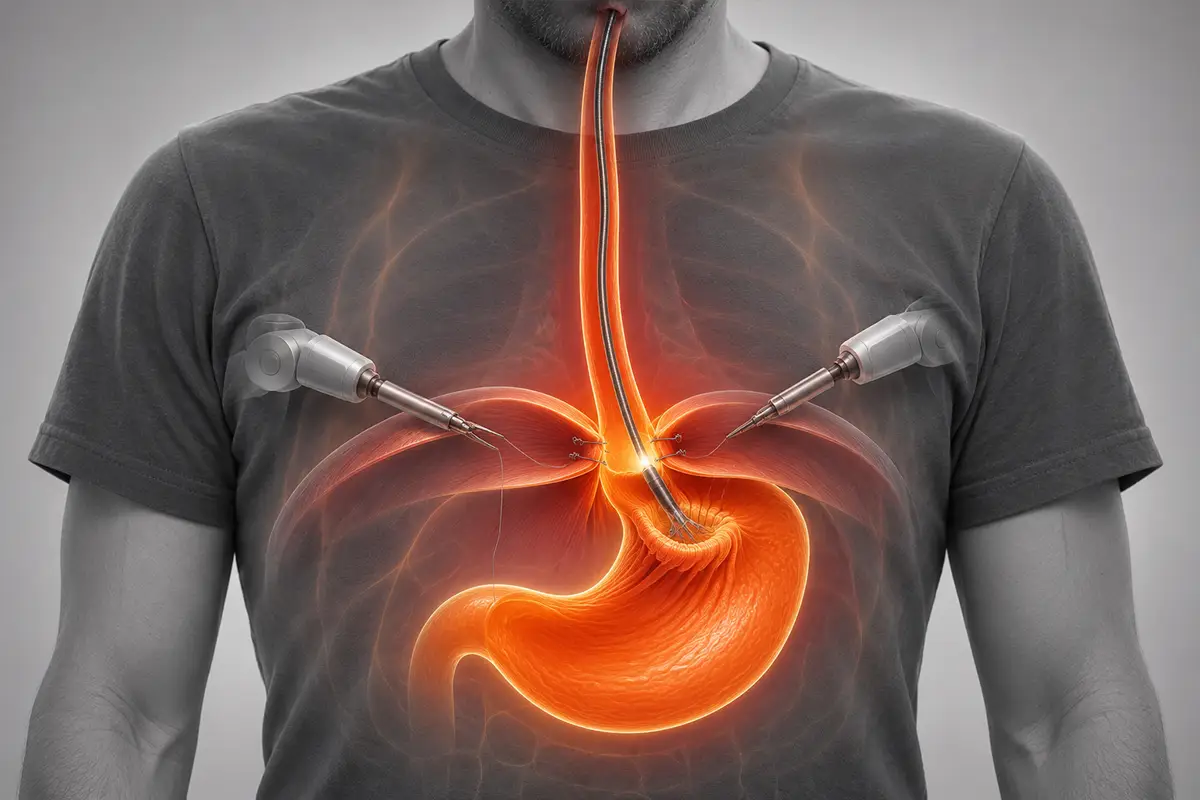
GASTROPARCESIS TREATMENT WITH ENTERRA THERAPY
Gastroparesis is a condition in which the stomach empties more slowly than normal even though there is no physical blockage. It can cause persistent nausea, vomiting, early fullness, bloating, abdominal discomfort, difficulty eating, dehydration, and poor nutrition.
Treatment commonly begins with dietary changes, improved blood-sugar control when applicable, and medications intended to reduce symptoms or improve stomach function. When chronic nausea and vomiting continue despite these treatments, some patients may be candidates for gastric electrical stimulation with Enterra Therapy.
WHAT IS ENTERRA THERAPY?
Enterra Therapy is an implantable gastric electrical stimulation system designed to help reduce chronic nausea and vomiting associated with diabetic or idiopathic gastroparesis.
The system includes a small neurostimulator that is placed beneath the skin of the abdomen. Two leads connect the neurostimulator to the muscular wall of the stomach. The device delivers mild, controlled electrical pulses that affect the nerves and pathways involved in nausea and vomiting.
The stimulation settings can be adjusted non-surgically during follow-up office visits based on the patient’s symptoms and response.
HOW IS THE ENTERRA STIMULATOR IMPLANTED?
At Compassion Surgical, implantation is performed using minimally invasive robotic techniques.
During the procedure:
- Two small leads are attached to the outer muscular wall of the stomach.
- The leads are connected to a small neurostimulator.
- The neurostimulator is placed beneath the skin, usually in the abdominal wall.
- The system is tested and programmed to begin therapy.
The procedure typically takes approximately one hour. Most patients go home the same day.
WHO MAY BE A CANDIDATE?
Enterra Therapy may be considered for patients who:
- Are between 18 and 70 years old.
- Have confirmed gastroparesis caused by diabetes or an unknown cause.
- Experience chronic and difficult-to-control nausea and vomiting.
- Have not received adequate relief from dietary changes and medications.
- Have completed an appropriate evaluation, which includes upper endoscopy and a gastric-emptying study.
- Are medically able to undergo surgery and anesthesia.
Enterra Therapy is not intended for every patient with gastroparesis. A consultation and review of prior testing are necessary to determine whether it may be appropriate.
WHAT HAPPENS AFTER SURGERY?
After implantation, patients return for follow-up visits so the neurostimulator can be checked and adjusted. Changes to the stimulation settings are made externally and do not require another operation.
Enterra Therapy is intended to help manage nausea and vomiting. It is not a cure for gastroparesis, and patients may still need dietary modifications, medications, diabetes management, and continued care with their gastroenterologist.
The system can be turned off or surgically removed if necessary.
RISK AND IMPORTANT SAFETY INFORMATION
As with any implanted device and surgical procedure, Enterra Therapy has potential risks. These may include bleeding, infection, pain, injury to surrounding structures, device or lead movement, device malfunction, loss of therapeutic benefit, stomach perforation, or the need for additional surgery.
Patients should discuss the potential benefits, limitations, alternatives, and risks with their surgeon before choosing treatment.
SCHEDULE A GASTROPARESIS CONSULTATION
If chronic nausea and vomiting from gastroparesis have continued despite dietary changes and medication, schedule a consultation with Compassion Surgical to discuss whether Enterra Therapy may be an option.