
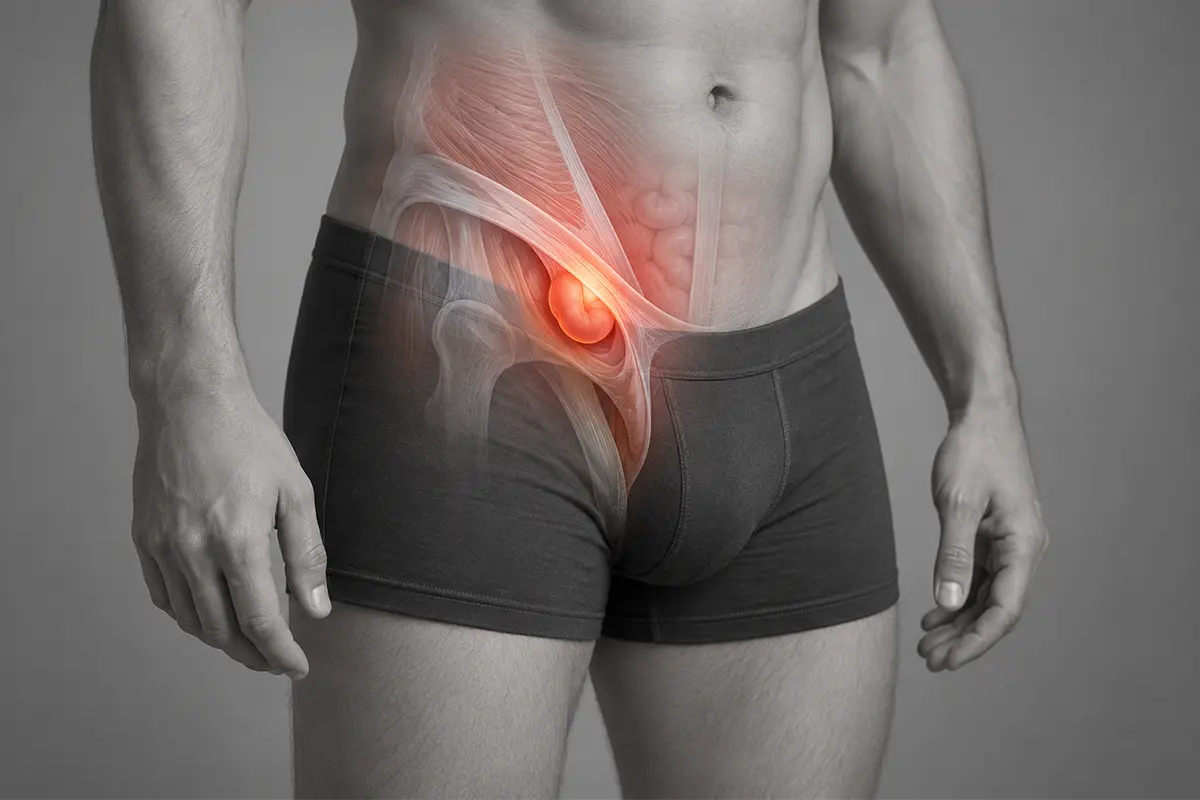
WHAT IS INGUINAL HERNIA SURGERY?
An inguinal hernia occurs when abdominal fat, intestine, or other tissue protrudes through a weak area in the lower abdominal wall near the groin. It is the most common type of hernia and occurs more frequently in men, although women can also develop groin hernias.
Patients may notice a bulge that becomes more prominent when standing, coughing, lifting, or straining. Other symptoms can include discomfort, pressure, burning, or a dragging sensation in the groin. Some inguinal hernias cause few or no symptoms.
Surgery is the only way to repair the underlying defect, but not every inguinal hernia requires immediate treatment. Watchful waiting may be reasonable for selected men with an asymptomatic or minimally symptomatic hernia. Women with a suspected groin hernia require careful evaluation because femoral hernias are more common and can have a higher risk of complications.
Compassion Surgical offers several approaches to inguinal hernia repair:
- Laparoscopic Inguinal Hernia Repair – repairs the hernia through several small abdominal incisions using a camera and specialized instruments
- Robotic-Assisted Inguinal Hernia Repair – uses robotic technology to assist with dissection, closure when appropriate, and placement of mesh behind the weakened area
- Open Inguinal Hernia Repair – repairs the hernia through an incision in the groin
- Mesh Repair – reinforces the weakened area with surgical mesh to reduce the risk of recurrence
The best approach depends on the patient’s anatomy, symptoms, previous hernia repairs, whether the hernia is present on one or both sides, overall health, and personal preferences.
WHEN IS INGUINAL HERNIA REPAIR CONSIDERED?
Pain or Discomfort
Surgery is commonly recommended when the hernia causes pain, pressure, burning, or a dragging sensation that affects daily life.
Progressive Symptoms or Enlargement
Inguinal hernias do not heal on their own and may enlarge or become more symptomatic over time. A hernia that is growing or becoming increasingly uncomfortable may benefit from elective repair.
Limitations on Activity
Repair may be appropriate when a hernia interferes with work, exercise, lifting, sports, or other normal activities.
Recurrent Inguinal Hernia
A hernia that returns after a previous repair may require a different operative approach. The surgeon will consider how the original repair was performed, whether mesh was used, and the location of the recurrence.
Incarceration or Strangulation
An incarcerated hernia contains tissue that has become trapped and cannot be returned to the abdomen. If the blood supply to the trapped tissue becomes compromised, the hernia is strangulated and requires emergency surgery.
Sudden or severe groin pain, a firm or tender bulge, redness or discoloration over the hernia, persistent vomiting, abdominal swelling, fever, or inability to pass stool or gas requires urgent medical evaluation.
HOW IS INGUINAL HERNIA SURGERY PERFORMED?
Inguinal hernia repair is performed at an accredited surgical facility. The type of anesthesia depends on the surgical approach and the patient’s health.
During laparoscopic or robotic-assisted repair, the surgeon operates through several small abdominal incisions. The hernia contents are returned to the abdomen, and mesh is generally placed behind the weakened area to reinforce the repair.
During open repair, the surgeon makes an incision in the groin, returns the protruding tissue to its proper position, and repairs the weakened area.
Open repair may be preferable for some large or complex hernias, but it is not automatically the best approach for every recurrent hernia. Minimally invasive repair may be particularly useful for bilateral hernias or certain recurrences after a previous open repair. The approach is selected individually.
WHAT SHOULD I EXPECT AFTER INGUINAL HERNIA SURGERY?
Most inguinal hernia repairs are outpatient procedures, and patients usually return home the same day. The length of surgery varies according to the type and complexity of the repair.
Temporary soreness, bruising, swelling, numbness, or a pulling sensation in the groin is common. Men may also experience temporary swelling or bruising of the scrotum. Walking and light daily activity are generally encouraged soon after surgery.
Many patients return to desk work and light activity within several days to two weeks. The timing of lifting, strenuous exercise, and return to physically demanding work depends on the repair, the patient’s comfort, and the surgeon’s instructions.
A postoperative appointment is generally scheduled within one to two weeks to evaluate healing and discuss progression of activity.
WHAT ARE THE POTENTIAL RISKS?
Potential complications include:
- Bleeding or infection
- Fluid collection or seroma
- Urinary retention
- Injury to nearby blood vessels, nerves, intestine, or structures of the spermatic cord
- Temporary or persistent groin numbness
- Acute or chronic groin pain
- Mesh-related complications
- Recurrence of the hernia
- Blood clots or reactions to anesthesia
The specific risks and benefits of open, laparoscopic, robotic-assisted, mesh, and non-mesh repair will be discussed during the surgical consultation.
PERSONALIZED INGUINAL HERNIA REPAIR
If you have noticed a groin bulge, pain, or discomfort, schedule a consultation at Compassion Surgical.
We will evaluate your symptoms, anatomy, activity level, previous repairs, and overall health to determine whether observation or surgery is appropriate and which repair offers the best balance of safety, durability, and recovery for you.