
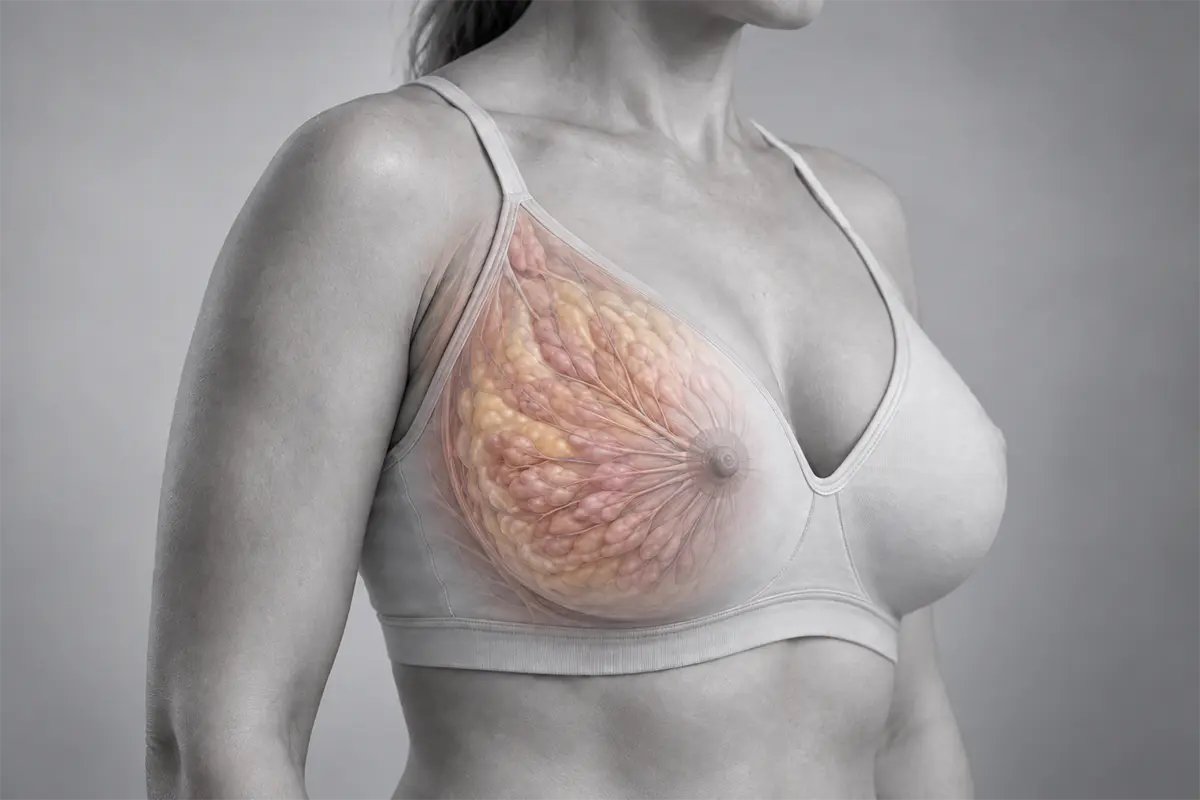
WHAT IS A LUMPECTOMY?
A lumpectomy, also called breast-conserving surgery or partial mastectomy, removes a breast tumor or abnormal area along with a margin of surrounding tissue while preserving the remainder of the breast.
Lumpectomy is commonly used to treat ductal carcinoma in situ and early-stage invasive breast cancer. It may also be used to remove selected high-risk lesions or benign abnormalities that require complete examination.
For appropriately selected patients with early-stage breast cancer, lumpectomy followed by recommended radiation therapy provides survival outcomes comparable to mastectomy. Choosing between lumpectomy and mastectomy depends on the diagnosis, tumor size and location, breast anatomy, genetic risk, ability to receive radiation, and the patient’s individual preferences.
Compassion Surgical offers:
- Lumpectomy or Partial Mastectomy – removes the tumor or abnormal area with a surrounding margin of breast tissue
- Image-Guided Lumpectomy – uses wire or wireless localization, including radar localization when appropriate, to identify an abnormality that cannot be felt
- Sentinel Lymph Node Biopsy – removes and examines the first lymph node or nodes most likely to receive drainage from a breast cancer
- Axillary Lymph Node Dissection – removes a larger group of underarm lymph nodes when clinically indicated
- Level I Oncoplastic Tissue Rearrangement – reshapes the remaining breast tissue after tumor removal to help preserve the breast’s natural contour
WHEN IS LUMPECTOMY CONSIDERED?
Early-Stage Invasive Breast Cancer
Lumpectomy is an option for many patients with a localized breast cancer that can be removed with clear margins while maintaining an acceptable breast appearance.
Radiation therapy is usually recommended after lumpectomy to reduce the risk of cancer returning in the breast. Additional treatment may include endocrine therapy, chemotherapy, immunotherapy, or targeted therapy depending on the cancer’s stage and biological characteristics.
Ductal Carcinoma in Situ
DCIS is a noninvasive breast cancer in which abnormal cells remain confined within the milk ducts. Localized DCIS may often be treated with lumpectomy, typically followed by radiation therapy depending on the patient’s individual risk and treatment plan.
High-Risk Breast Lesions
Some high-risk findings, such as atypical ductal hyperplasia or selected other lesions diagnosed on needle biopsy, may require surgical excision. Removing the entire abnormal area allows a pathologist to determine whether DCIS or invasive cancer is also present.
Not every high-risk lesion requires surgery. The decision depends on the specific pathology, imaging findings, biopsy method, and whether the imaging and pathology results agree.
Benign Breast Masses
Most benign breast masses do not require surgical removal. Excision may be considered when a mass is enlarging, symptomatic, difficult to diagnose with imaging and needle biopsy, or associated with imaging and pathology findings that do not agree.
Preference for Breast Conservation
Patients who are medically appropriate candidates may choose lumpectomy because they want to preserve as much of the natural breast as possible. The expected cosmetic result, need for radiation, possibility of additional surgery, and alternative of mastectomy should be discussed before making a decision.
HOW IS A LUMPECTOMY PERFORMED?
Lumpectomy is generally performed under general anesthesia at an accredited surgical facility. The surgeon makes an incision near the tumor or in a location selected to support an appropriate cosmetic result.
If the abnormal area cannot be felt, a radiologist may place a wire, radar reflector, magnetic marker, or other localization device using mammography or ultrasound guidance. The surgeon uses this marker to identify the correct tissue during the operation.
The abnormal tissue is removed with a surrounding margin and sent to a pathologist. In some cases, specimen imaging is performed during surgery to confirm that the targeted abnormality was removed.
When appropriate, the surgeon may rearrange the remaining breast tissue using an oncoplastic closure to reduce the visible defect and preserve the breast’s contour.
If lymph node evaluation is indicated, a tracer, dye, or both may be used to identify the sentinel lymph nodes. These nodes are removed through a separate incision and examined for cancer cells.
WHAT DO SURGICAL MARGINS MEAN?
The pathologist examines the edges, or margins, of the removed tissue to determine whether cancer cells extend to the outer surface of the specimen.
A clear or negative margin means no cancer is present at the relevant edge. A positive margin means cancer cells reach the edge, suggesting that abnormal tissue may remain in the breast.
If a margin is positive, an additional operation may be recommended to remove more tissue. This is called a re-excision. In some circumstances, mastectomy may be recommended if clear margins cannot be achieved while preserving an acceptable amount of breast tissue.
Final margin status is usually not known until the pathology report is completed several days after surgery.
WHAT SHOULD I EXPECT AFTER LUMPECTOMY?
Lumpectomy is usually an outpatient operation, and most patients return home the same day. The length of surgery depends on whether image-guided localization, lymph node evaluation, or oncoplastic tissue rearrangement is performed.
Temporary soreness, bruising, swelling, numbness, firmness, or a change in breast shape may occur. Patients who undergo lymph node surgery may also experience underarm discomfort or temporary limitation of shoulder movement.
Many patients return to desk work and light activities within several days to two weeks. The timing depends on the extent of surgery, the physical demands of the patient’s work, and the surgeon’s recommendations.
A postoperative appointment is generally scheduled within one to two weeks to evaluate healing and review the final pathology report. At that visit, the surgeon will discuss the margins, lymph node results when applicable, and whether additional surgery or treatment is recommended.
Radiation therapy is commonly recommended after lumpectomy for breast cancer, although selected patients may be candidates for a shorter course, partial-breast treatment, or omission of radiation. This decision is made with the radiation oncology team based on the patient’s age, diagnosis, tumor characteristics, and overall treatment plan.
WHAT ARE THE POTENTIAL RISKS?
Potential complications include:
- Bleeding or hematoma
- Infection
- Fluid accumulation or seroma
- Pain, numbness, or changes in breast sensation
- Changes in breast size, contour, or symmetry
- Poor wound healing
- Positive margins requiring additional surgery
- Arm stiffness
- Lymphedema following lymph node surgery
- Reactions to anesthesia
The risks specific to the planned breast and lymph node procedures will be discussed before surgery.
PERSONALIZED BREAST-CONSERVING SURGERY
If you have been diagnosed with DCIS, early-stage breast cancer, a high-risk breast lesion, or a concerning breast mass, schedule a consultation at Compassion Surgical.
We will review your imaging, biopsy results, anatomy, cancer risk, and treatment preferences to determine whether lumpectomy is appropriate and whether image-guided localization, lymph node evaluation, or oncoplastic tissue rearrangement should be included in your surgical plan.