
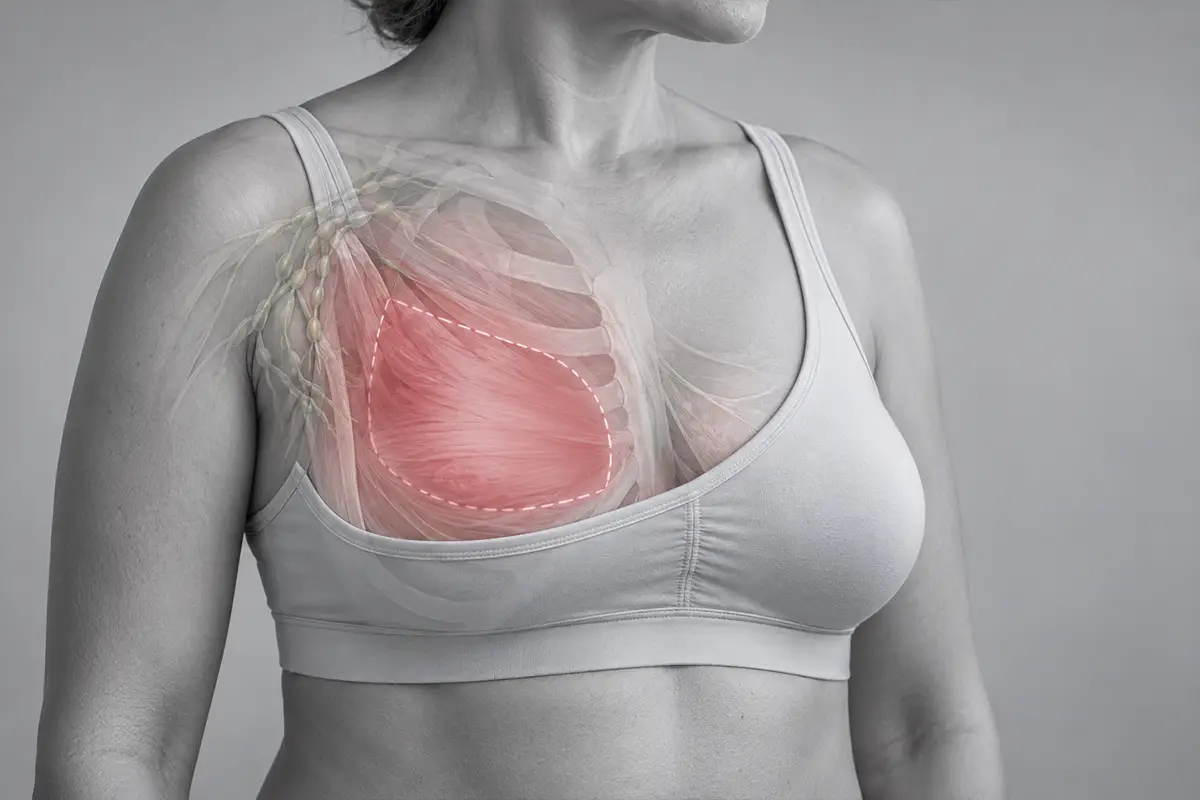
WHAT IS A MASTECTOMY?
A mastectomy is an operation that removes the breast, most often to treat breast cancer or reduce the risk of developing breast cancer in patients with a substantially elevated inherited risk.
Unlike a lumpectomy, which removes a tumor and a surrounding margin while preserving most of the breast, a mastectomy removes the breast tissue. The specific technique determines whether the breast skin, nipple, and areola are also removed.
The appropriate operation depends on the diagnosis, tumor size and location, breast anatomy, lymph-node evaluation, genetic risk, anticipated need for radiation, reconstructive plans, and the patient’s personal preferences.
Compassion Surgical offers:
- Simple or Total Mastectomy – removes the breast tissue, nipple, areola, and an appropriate amount of breast skin
- Skin-Sparing Mastectomy – removes the breast tissue, nipple, and areola while preserving most of the breast skin for reconstruction
- Nipple-Sparing Mastectomy – removes the breast tissue while preserving the breast skin, nipple, and areola in appropriately selected patients
- Modified Radical Mastectomy – removes the breast along with an axillary lymph-node dissection while preserving the chest muscles
- Risk-Reducing Mastectomy – removes one or both breasts to substantially reduce future breast-cancer risk in appropriately selected high-risk patients
- Sentinel Lymph Node Biopsy – removes the first lymph node or nodes most likely to receive drainage from a breast cancer
- Axillary Lymph Node Dissection – removes a larger group of underarm lymph nodes when clinically indicated
When reconstruction is desired, the breast surgeon coordinates the operative plan with a plastic surgeon.
WHEN IS MASTECTOMY CONSIDERED?
Breast Cancer
Mastectomy may be recommended when:
- A tumor is large relative to the size of the breast
- Cancer is present in multiple separate areas of the breast
- Clear margins cannot be obtained with breast-conserving surgery
- The patient cannot safely receive radiation therapy
- The cancer has returned after previous lumpectomy and breast radiation
- The tumor involves the skin, nipple, or other structures in a way that makes breast conservation inappropriate
- The patient prefers mastectomy after reviewing the risks and benefits of all appropriate options
Some patients receive chemotherapy, immunotherapy, targeted therapy, or endocrine therapy before mastectomy. Others undergo surgery first. The sequence depends on the cancer’s stage and biological characteristics.
Ductal Carcinoma in Situ
DCIS is a noninvasive breast cancer in which abnormal cells remain confined within the milk ducts. Mastectomy may be recommended when DCIS is extensive, involves multiple areas of the breast, cannot be removed with clear margins through lumpectomy, or when breast conservation would produce an unacceptable result.
Recurrent Breast Cancer
Patients who develop cancer in a breast previously treated with lumpectomy and radiation may require mastectomy. Treatment is individualized based on the location and extent of the recurrence, previous therapy, and overall health.
Inherited or Substantially Elevated Risk
Patients with certain inherited genetic variants, including BRCA1 or BRCA2, may consider bilateral risk-reducing mastectomy. This operation can substantially lower—but cannot completely eliminate—the risk of developing breast cancer.
A strong family history alone does not automatically mean mastectomy is necessary. Decisions regarding risk-reducing surgery should follow individualized risk assessment and genetic counseling when appropriate.
Patient Preference
Some patients who are candidates for either lumpectomy or mastectomy choose mastectomy based on their values, anxiety about recurrence, reconstructive preferences, or desire to reduce the likelihood of needing breast radiation.
Mastectomy does not guarantee that radiation therapy will be unnecessary. It also does not eliminate all possibility of breast-cancer recurrence or the need for continued medical follow-up.
HOW IS THE TYPE OF MASTECTOMY SELECTED?
Simple or Total Mastectomy
A simple mastectomy removes the breast tissue, nipple, areola, and an appropriate amount of skin. It may be performed with sentinel lymph-node biopsy when cancer staging is required.
Skin-Sparing Mastectomy
A skin-sparing mastectomy preserves most of the natural breast skin while removing the breast tissue, nipple, and areola. It is generally performed when immediate reconstruction is planned.
Nipple-Sparing Mastectomy
A nipple-sparing mastectomy preserves the breast skin, nipple, and areola. Not every patient is a candidate. Eligibility depends on the tumor’s location, breast anatomy, blood supply to the nipple and skin, previous operations or radiation, smoking status, and reconstructive plan.
Tissue beneath the nipple may be examined by a pathologist. Additional tissue or the nipple-areolar complex may need to be removed if cancer is identified or if its blood supply is compromised.
Modified Radical Mastectomy
A modified radical mastectomy combines removal of the breast with an axillary lymph-node dissection. It may be recommended when more extensive cancer is present in the underarm lymph nodes.
BREAST RECONSTRUCTION AND FLAT CLOSURE
Patients may choose immediate reconstruction, delayed reconstruction, or no reconstruction.
Reconstruction may use an implant, a tissue expander followed by an implant, or tissue transferred from another part of the body. A plastic surgeon will explain the available options and how factors such as radiation therapy, smoking, diabetes, body composition, and previous operations may affect reconstruction.
Patients who do not want reconstruction may choose an aesthetic flat closure, in which excess skin and tissue are arranged to create a smooth, flat chest contour.
The decision is personal and should reflect the patient’s diagnosis, treatment needs, health, and preferences.
HOW IS MASTECTOMY PERFORMED?
Mastectomy is performed under general anesthesia at an accredited surgical facility or hospital. The surgeon removes the breast tissue using an incision planned according to the type of mastectomy and reconstructive approach.
If sentinel lymph-node biopsy is required, a radioactive tracer, dye, or both may be used to identify the first draining lymph nodes. When an axillary lymph-node dissection is indicated, a larger group of underarm nodes is removed.
When immediate reconstruction is planned, the plastic surgeon begins reconstruction after the breast tissue has been removed and the skin has been evaluated.
One or more surgical drains are commonly placed to remove fluid during the early healing period. The removed breast and lymph-node tissue is examined by a pathologist.
WHAT SHOULD I EXPECT AFTER MASTECTOMY?
Mastectomy may be performed as an outpatient or short-stay operation. The length of surgery and hospitalization depends on whether one or both breasts are removed, whether lymph-node surgery is performed, and whether immediate reconstruction is included.
Temporary pain, swelling, bruising, tightness, fatigue, and numbness of the chest are common. Some loss of breast and nipple sensation is expected and may be permanent, even when the nipple is preserved.
Patients receive instructions regarding incision and drain care, pain control, arm and shoulder exercises, lifting, driving, bathing, and return to work. Recovery after mastectomy alone commonly takes several weeks. Reconstruction or axillary lymph-node dissection may extend the recovery period.
A postoperative appointment is generally scheduled within one to two weeks to evaluate healing, manage drains, and review the final pathology report. Those results help determine whether additional surgery, chemotherapy, endocrine therapy, targeted therapy, immunotherapy, or radiation therapy is recommended.
WHAT ARE THE POTENTIAL RISKS?
Potential complications include:
- Bleeding or hematoma
- Infection
- Fluid accumulation or seroma
- Delayed wound healing
- Loss of blood supply to part of the skin or nipple
- Persistent pain, tightness, or numbness
- Shoulder stiffness
- Lymphedema following lymph-node surgery
- Implant or reconstruction-related complications
- Need for additional surgery
- Reactions to anesthesia
- Blood clots
The specific risks depend on the type of mastectomy, lymph-node procedure, reconstruction, previous treatment, and the patient’s health.
MASTECTOMY FAQs
Will I still need radiation after mastectomy?
Some patients do. Radiation may be recommended based on the tumor’s size, lymph-node involvement, margins, skin or chest-wall involvement, response to preoperative treatment, and other risk factors. In some cases, the final recommendation cannot be made until the surgical pathology is available.
Does mastectomy eliminate the risk of breast cancer?
No operation can remove every microscopic breast cell. Mastectomy greatly reduces the amount of breast tissue and can substantially reduce future cancer risk, but the risk is not zero.
Will I continue to need breast imaging?
After unilateral mastectomy, routine mammograms generally continue for the remaining breast. Routine mammography is usually not performed on a breast reconstructed after mastectomy, although new symptoms or examination findings may require diagnostic imaging. Follow-up recommendations are individualized.
Will I have normal sensation after surgery?
Most patients experience reduced or absent sensation in the breast skin after mastectomy. Some sensation may return over time, but numbness can be permanent. Nipple sensation is also commonly reduced or absent after nipple-sparing mastectomy.
PERSONALIZED MASTECTOMY CARE
If you have been diagnosed with breast cancer or DCIS, experienced a breast-cancer recurrence, or are considering risk-reducing surgery because of an inherited predisposition, schedule a consultation at Compassion Surgical.
We will review your imaging, pathology, cancer stage, genetic risk, reconstructive preferences, and treatment goals to determine whether mastectomy is appropriate and which surgical approach best fits your needs.