
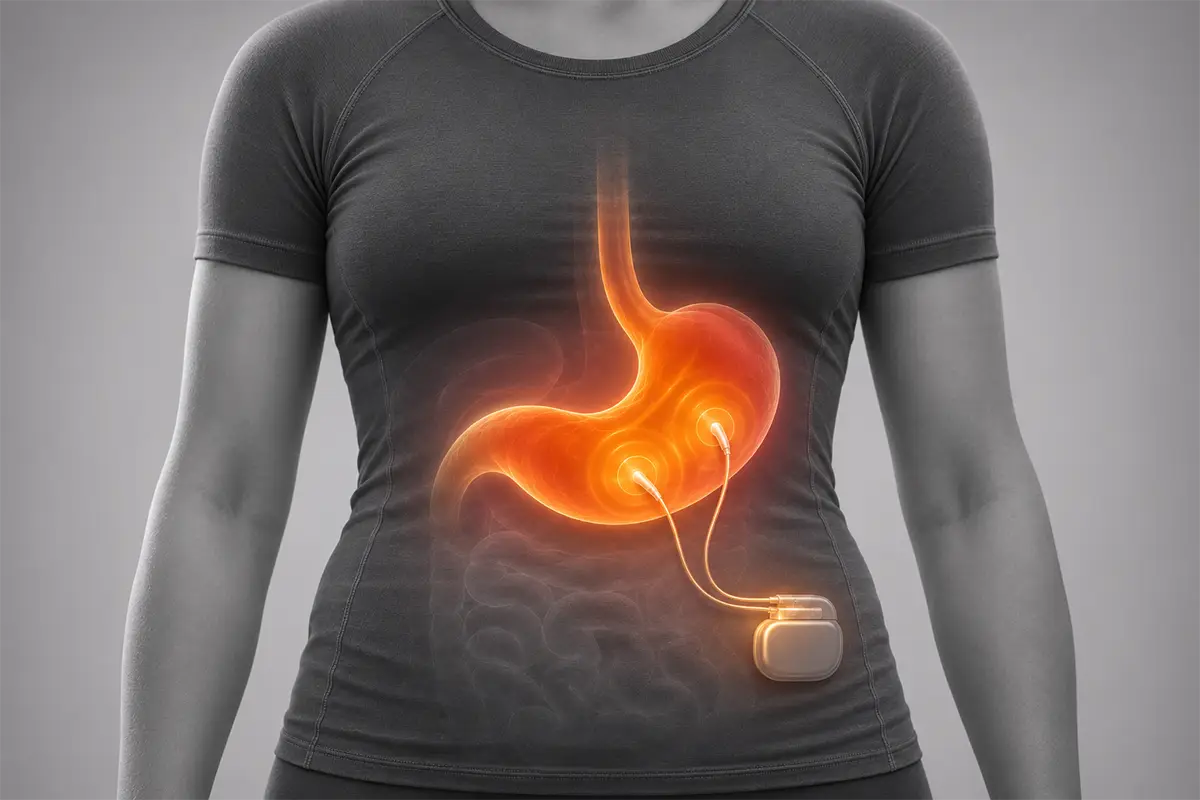
ROBOTIC cTIF FOR GERD AND HIATAL HERNIA
Chronic gastroesophageal reflux disease, or GERD, is often associated with both a weakened valve between the esophagus and stomach and a hiatal hernia. When medication and lifestyle changes do not provide an acceptable long-term solution, repairing both anatomical problems may improve reflux control.
Combined transoral incisionless fundoplication, known as cTIF, brings together robotic hiatal hernia repair and endoscopic reconstruction of the gastroesophageal valve during the same anesthesia session.
WHAT IS ROBOTIC cTIF?
Robotic cTIF is a two-part procedure performed through collaboration between a surgeon and a gastroenterologist:
- Robotic hiatal hernia repair: The surgeon returns the stomach to its proper position, repairs the opening in the diaphragm, and restores the normal anatomy around the esophagus.
- TIF 2.0 with the EsophyX Z+ device: The gastroenterologist passes the EsophyX device through the mouth using an endoscope. The device reconstructs the gastroesophageal valve from inside the stomach, creating a partial fundoplication designed to strengthen the natural barrier against reflux.
Both portions are performed consecutively during the same procedure and under the same anesthesia. Although the robotic hernia repair uses small abdominal incisions, the endoscopic TIF portion does not require an additional external incision.
WHY COMBINE HIATAL HERNIA REPAIR WITH TIF?
A hiatal hernia changes the position and function of the junction between the esophagus and stomach. Repairing the hernia addresses the opening in the diaphragm, while TIF reconstructs the valve that helps prevent stomach contents from refluxing into the esophagus.
The combined procedure is designed to address both components while avoiding the need for a traditional surgical fundoplication in appropriately selected patients.
WHO MAY BE A CANDIDATE FOR cTIF?
Robotic cTIF may be considered for patients who:
- Have chronic GERD symptoms such as heartburn, regurgitation, chronic cough, or reflux-related throat symptoms.
- Have a hiatal hernia that requires surgical repair.
- Require or respond to acid-suppressing medication but want to explore an anatomical treatment option.
- Continue to experience troublesome symptoms despite appropriate medical and lifestyle treatment.
- Have completed the necessary diagnostic evaluation.
- Are medically able to undergo robotic surgery, endoscopy, and anesthesia.
Not every patient with reflux or a hiatal hernia is a candidate. The recommended treatment depends on the patient’s anatomy, testing, symptoms, previous operations, and overall health.
EVALUATION BEFORE cTIF
An evaluation may include:
- Upper endoscopy
- Esophageal pH testing
- Esophageal manometry
- Imaging of the esophagus and stomach
- Review of previous reflux treatments and medications
These studies help determine whether cTIF, TIF alone, robotic hiatal hernia repair, or another treatment is most appropriate.
RECOVERY AFTER ROBOTIC cTIF
Patients are given detailed dietary and activity instructions following surgery. A temporary liquid and soft-food diet allows the repaired tissues to heal. Most patients gradually resume normal activities, but recovery varies according to the extent of the hernia repair and the patient’s overall health.
Patients continue follow-up with the surgical and gastroenterology teams after the procedure.
RISKS AND ALTERNATIVES
Potential risks include bleeding, infection, injury to the esophagus, stomach, or surrounding structures, difficulty swallowing, bloating, recurrence of the hiatal hernia or reflux, reaction to anesthesia, and the possible need for another procedure.
Alternative treatments may include lifestyle changes, medications, TIF alone, robotic hiatal hernia repair with another type of fundoplication, magnetic sphincter augmentation, or continued medical management.
The risks, benefits, and alternatives will be reviewed during the consultation.
SCHEDULE A GERD AND HIATAL HERNIA CONSULTATION
If you have chronic reflux and a hiatal hernia, schedule a consultation with Compassion Surgical to determine whether robotic cTIF may be appropriate for you.