
WHAT IS ROBOTIC HERNIA REPAIR?
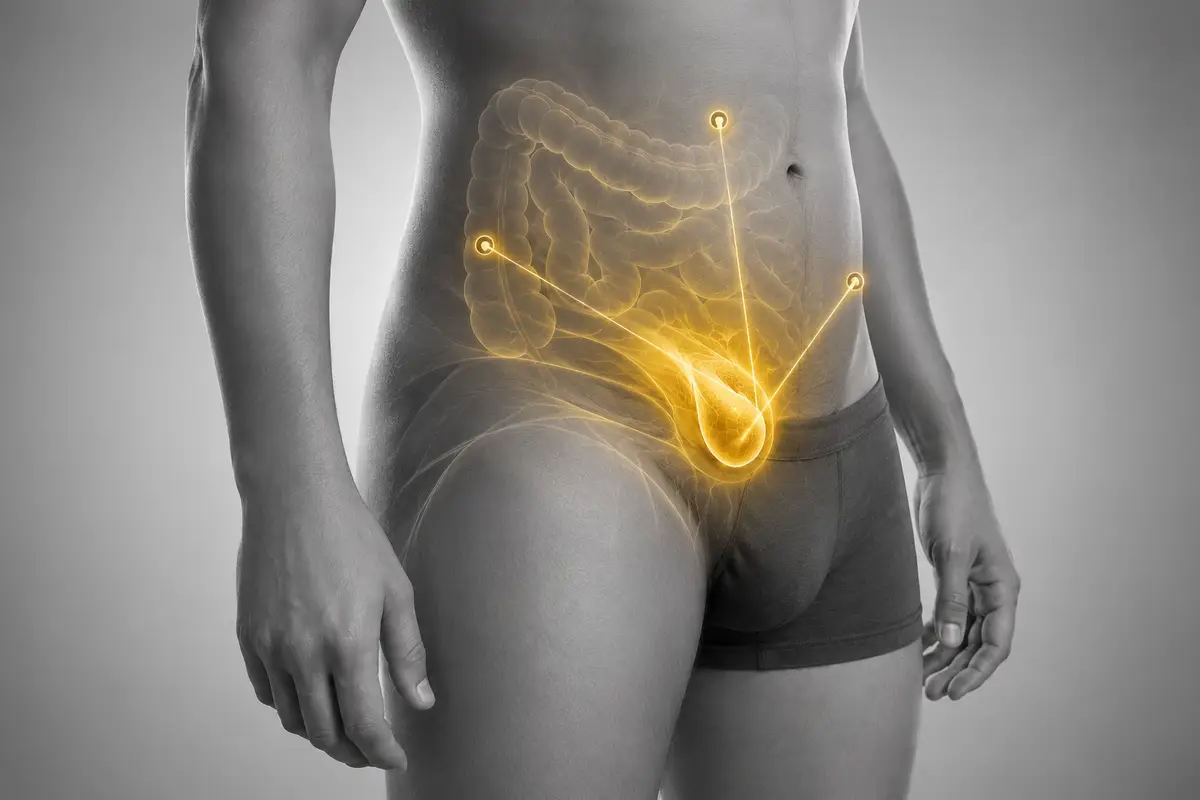
A hernia develops when fat, intestine, or another internal structure pushes through a weakness or opening in the surrounding muscle or connective tissue. Hernias commonly occur in the groin, around the belly button, at the site of a previous abdominal incision, or elsewhere in the abdominal wall. Hiatal hernias occur when part of the stomach moves through an opening in the diaphragm and into the chest.
Symptoms may include a visible or palpable bulge, pain, pressure, burning, or discomfort that becomes more noticeable with lifting, coughing, straining, or prolonged standing. Some hernias cause few or no symptoms, while others gradually enlarge or become more uncomfortable.
Hernias do not heal on their own, and medication cannot repair the underlying defect. Observation may be appropriate for certain patients with small or minimally symptomatic hernias, while surgery may be recommended for symptomatic, enlarging, incarcerated, or otherwise concerning hernias.
At Compassion Surgical, Dr. Albert Amini performs open, laparoscopic, and robotic-assisted hernia repair. The most appropriate approach is selected according to the type and size of the hernia, previous operations, overall health, and individual treatment goals.
WHAT TYPES OF HERNIAS CAN BE REPAIRED ROBOTICALLY?
Inguinal Hernias
An inguinal hernia occurs when tissue pushes through a weak area in the lower abdominal wall near the groin. These hernias are more common in men but can occur in women. Robotic-assisted repair may be considered for first-time, bilateral, or recurrent inguinal hernias.
Umbilical Hernias
An umbilical hernia develops through a weak area at or near the belly button. In adults, these hernias may enlarge or become painful over time. Surgery may be recommended when the hernia causes symptoms, increases in size, or presents a risk of incarceration.
Ventral and Incisional Hernias
A ventral hernia can develop through any weakened area of the abdominal wall. An incisional hernia occurs at or near the site of a previous surgical incision. Robotic techniques may be particularly useful for selected abdominal wall repairs that require precise dissection, closure of the defect, or placement of mesh within a specific tissue plane.
Recurrent or Complex Hernias
Hernias that return after previous repair or involve larger abdominal wall defects may require a more individualized reconstruction. Depending on the defect, robotic-assisted surgery may allow the surgeon to perform advanced abdominal wall repair through smaller incisions. Some complex hernias are still best treated with an open operation.
Hiatal and Paraesophageal Hernias
A hiatal hernia occurs when part of the stomach moves through the diaphragm and into the chest. Robotic-assisted surgery may be used to return the stomach to the abdomen, repair the opening in the diaphragm, and perform an anti-reflux procedure when appropriate.
HOW IS ROBOTIC HERNIA REPAIR PERFORMED?
Robotic hernia repair is generally performed under general anesthesia. The surgeon makes several small incisions and inserts a camera and specialized instruments into the surgical area.
The surgeon remains in complete control throughout the operation, directing every movement of the instruments from a nearby console. The robotic system does not make decisions or perform the procedure independently. It provides a magnified three-dimensional view and wristed instruments that can assist with precise dissection and suturing.
The herniated tissue is returned to its proper position, and the opening in the abdominal wall or diaphragm is closed when appropriate. Surgical mesh may be used to reinforce the repair and reduce the risk of recurrence. The decision to use mesh—and the type and position of the mesh—depends on the hernia and the patient’s individual circumstances.
Operative time varies considerably. A straightforward repair may take approximately one hour, while recurrent, hiatal, or complex abdominal wall reconstruction may take several hours.
ROBOTIC, LAPAROSCOPIC, OR OPEN HERNIA REPAIR
No single surgical technique is best for every patient.
Robotic and laparoscopic repairs are both minimally invasive approaches performed through several small incisions. Compared with conventional laparoscopy, the robotic platform provides three-dimensional visualization and instruments with a greater range of motion. These features are helpful for suturing and reconstructing complex tissue planes.
An open repair is performed through an incision over or near the hernia. Open surgery may be recommended for very large or complicated hernias, emergencies, certain recurrent hernias, or patients whose anatomy or medical history makes minimally invasive surgery less suitable.
Minimally invasive repair provides smaller incisions and, in selected patients, less postoperative discomfort and an earlier return to activity than open surgery. However, robotic surgery has not been shown to produce better results for every hernia. The recommended approach should be based on the hernia, the patient, and the surgeon’s experience—not the technology alone.
WHAT CAN I EXPECT AFTER ROBOTIC HERNIA REPAIR?
Many robotic hernia repairs are performed as outpatient procedures, although patients undergoing larger or more complex repairs may require an overnight stay or longer hospitalization.
Walking is encouraged soon after surgery. Temporary soreness, swelling, bruising, and a pulling sensation around the repair are common. Some patients may also experience abdominal bloating or shoulder discomfort from the gas used during minimally invasive surgery.
Return to activity depends on the type and complexity of the repair. Patients with a smaller, uncomplicated hernia may resume light activities within several days and return to many routine activities within 1 – 2 weeks. Recovery after complex abdominal wall reconstruction or hiatal hernia repair may take considerably longer.
Patients should follow their surgeon’s instructions regarding driving, work, lifting, exercise, and diet. A postoperative appointment is generally scheduled within 1 – 2 weeks to evaluate healing and discuss progression of activity.
WHAT ARE THE POSSIBLE RISKS?
Possible complications of hernia surgery include:
- Bleeding or infection
- Fluid collection or seroma
- Injury to nearby organs, nerves, or blood vessels
- Difficulty urinating
- Blood clots
- Persistent or chronic pain
- Mesh-related complications
- Recurrence of the hernia
- Conversion to an open operation when necessary for safety
The risks vary according to the type of hernia, operative approach, medical history, and complexity of the repair.
Patients should seek urgent medical attention for severe or worsening pain, persistent vomiting, fever, abdominal distention, inability to pass stool or gas, or a painful bulge that cannot be pushed back into place. These symptoms may indicate incarceration or strangulation.
PERSONALIZED HERNIA REPAIR
If you have a painful or enlarging hernia, schedule a consultation at Compassion Surgical in Chandler, Arizona. Dr. Albert Amini or Dr. Weston Stover can evaluate your condition and explain whether robotic-assisted, laparoscopic, or open hernia repair is the most appropriate option for you.