
WHAT IS SKIN CANCER SURGERY?
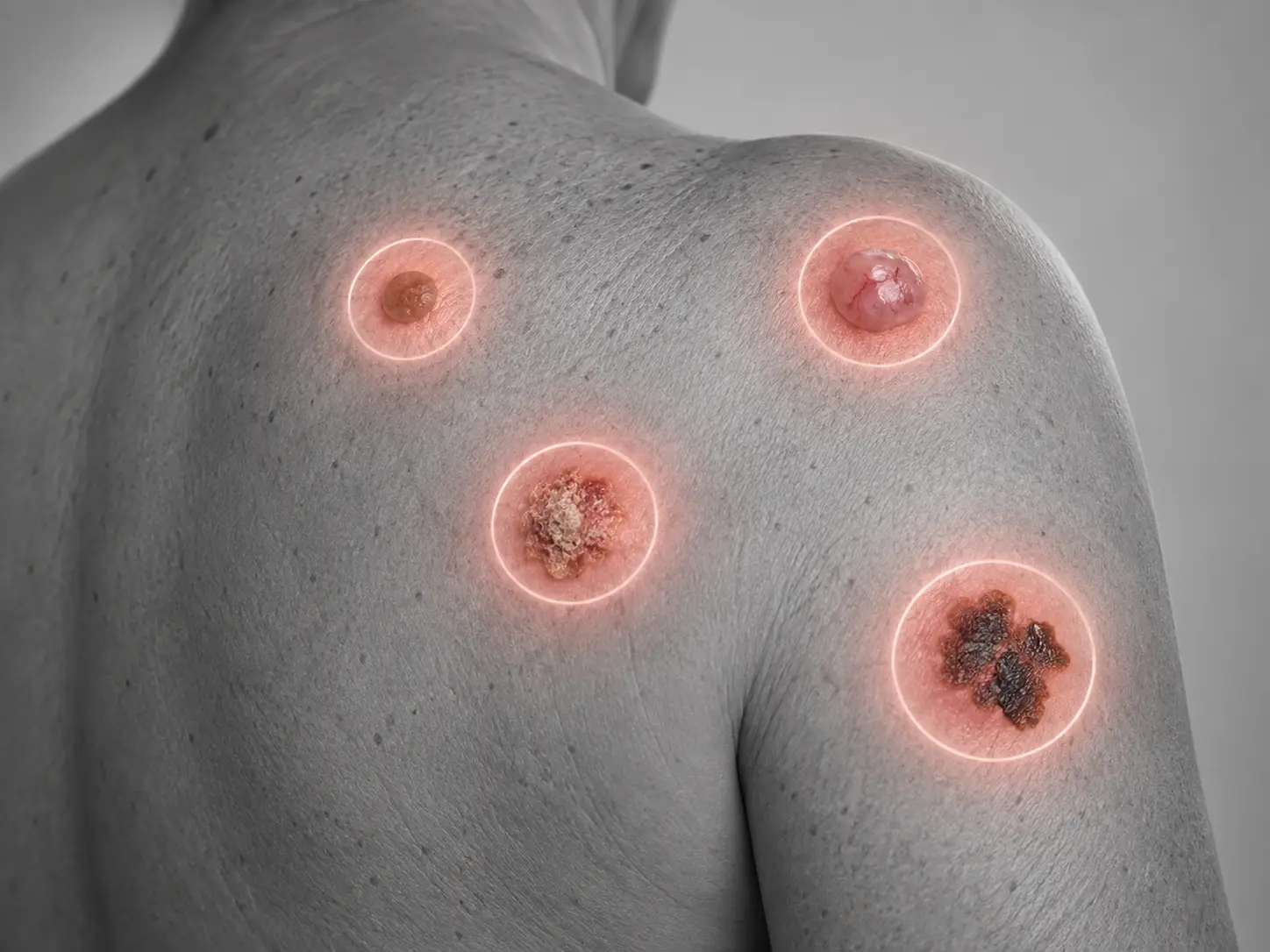
The skin can develop many types of benign, precancerous, and cancerous growths. Common skin cancers include basal cell carcinoma, squamous cell carcinoma, and melanoma. Less common cancers, such as Merkel cell carcinoma and dermatofibrosarcoma protuberans, may also require surgical treatment.
Patients may notice a new or changing mole, a nonhealing sore, an irregular growth, or a lesion that bleeds, crusts, or grows. In other cases, a dermatologist may perform a biopsy that confirms cancer and refers the patient for additional surgery.
The appropriate operation depends on the diagnosis, location, size, depth, pathology findings, and whether there is concern for spread to nearby lymph nodes. At Compassion Surgical, treatment may include:
- Wide Local Excision – removes the cancer along with a measured margin of surrounding tissue
- Re-Excision – removes additional tissue when a previous procedure did not produce adequate or cancer-free margins
- Local Tissue Rearrangement or Flap Closure – uses nearby skin and tissue to close selected surgical defects
- Sentinel Lymph Node Biopsy – identifies and removes the first lymph node or nodes most likely to receive drainage from a cancer
- Regional Lymph Node Dissection – removes lymph nodes from an involved area when clinically indicated
More extensive reconstruction may be coordinated with a plastic or reconstructive surgeon when appropriate.
COMMON REASONS FOR SKIN CANCER SURGERY
Melanoma
Melanoma can spread to lymph nodes and other organs if not treated appropriately. After the diagnosis is established by biopsy, the usual surgical treatment is wide local excision. The width of the surgical margin is based primarily on the melanoma’s depth and other pathology findings.
A sentinel lymph node biopsy may be recommended for selected patients with invasive melanoma to determine whether cancer cells have reached the regional lymph nodes. It is not necessary for every melanoma and is generally performed at the same time as the wide local excision.
Basal Cell Carcinoma
Basal cell carcinoma is the most common skin cancer. It usually grows slowly and rarely spreads to distant parts of the body, but it can damage nearby tissue when left untreated.
Treatment options include standard surgical excision and Mohs micrographic surgery. Mohs surgery may be preferred for selected cancers on the face, recurrent tumors, lesions with poorly defined borders, and other high-risk cases. When Mohs surgery is the better option, the patient may be referred to a specially trained Mohs surgeon.
Squamous Cell Carcinoma
Squamous cell carcinoma can grow more aggressively than basal cell carcinoma, and certain high-risk tumors can spread to regional lymph nodes. Treatment may include standard excision or Mohs surgery depending on the tumor’s size, location, pathology, and risk features.
Lymph-node evaluation is not routinely needed for every squamous cell carcinoma. Imaging, biopsy, sentinel-node evaluation, or lymph-node surgery may be considered in selected high-risk cases or when lymph-node involvement is suspected.
Less Common Skin Cancers
Merkel cell carcinoma, dermatofibrosarcoma protuberans, and other uncommon skin cancers often require individualized surgical planning. Treatment may involve wide excision, margin assessment, lymph-node staging, reconstruction, radiation therapy, or systemic treatment coordinated through a multidisciplinary cancer team.
Benign or Uncertain Lesions
Some lesions are removed because they are painful, repeatedly irritated, enlarging, or difficult to diagnose. When appropriate, the removed tissue is sent to a pathology laboratory to establish or confirm the diagnosis. Benign lesion removal is addressed separately from definitive skin-cancer surgery.
HOW IS SKIN CANCER SURGERY PERFORMED?
Before definitive surgery, most suspected skin cancers are evaluated with a biopsy. The pathology report helps determine the required margin, whether lymph-node staging should be discussed, and whether additional specialists should participate in treatment.
Smaller excisions may be performed in the office using local anesthesia. Larger excisions, sentinel lymph node biopsies, reconstructive procedures, and regional lymph-node operations are generally performed in an accredited surgical facility under sedation or general anesthesia.
During wide local excision, the surgeon removes the previous biopsy site or remaining tumor along with an appropriate margin of surrounding tissue. The specimen is sent to pathology to assess the diagnosis and surgical margins.
If a sentinel lymph node biopsy is indicated, a radioactive tracer and sometimes blue dye are used to identify the first draining lymph node or nodes. These nodes are removed through a separate incision and examined for cancer cells. Additional lymph-node surgery is considered selectively based on clinical findings, imaging, pathology, and multidisciplinary recommendations; it is not automatically required after every positive sentinel-node biopsy.
The wound may be closed directly, reconstructed by rearranging nearby tissue, or covered with a skin graft. The closure method depends on the size and location of the defect and the need to preserve function.
WHAT TO EXPECT WITH SKIN CANCER SURGERY
Most skin-cancer operations are performed on an outpatient basis. Procedure and recovery times vary considerably according to the extent of the excision, the method of closure, and whether lymph nodes are evaluated.
After a straightforward excision, patients may resume light activities within a few days, although the incision may take several weeks to heal completely. Recovery after flap reconstruction, skin grafting, sentinel lymph node biopsy, or regional lymph-node dissection may take longer.
Patients receive instructions for wound care, bathing, activity, and pain management. Drains may be required after larger reconstructions or lymph-node surgery. A follow-up appointment is generally scheduled within 1 – 2 weeks to evaluate healing and review the final pathology results.
WHAT ARE THE POSSIBLE RISKS?
Potential risks depend on the operation and may include:
- Bleeding or infection
- Wound separation or delayed healing
- Fluid collection
- Scarring
- Numbness or changes in sensation
- Partial loss of a skin flap or graft
- Injury to nearby nerves or other structures
- Lymphedema after lymph-node surgery
- Positive surgical margins requiring additional treatment
- Recurrence of the cancer
Your surgeon will discuss the risks most relevant to the planned procedure.
COORDINATED SURGICAL CARE FOR SKIN CANCER
If a biopsy has identified melanoma or another skin cancer requiring surgical treatment, schedule a consultation at Compassion Surgical. Our surgeons can review your pathology, determine whether wide local excision or lymph-node evaluation is appropriate, and coordinate care with your dermatologist, medical oncologist, radiation oncologist, or reconstructive surgeon when needed.